St. Andrew’s Church
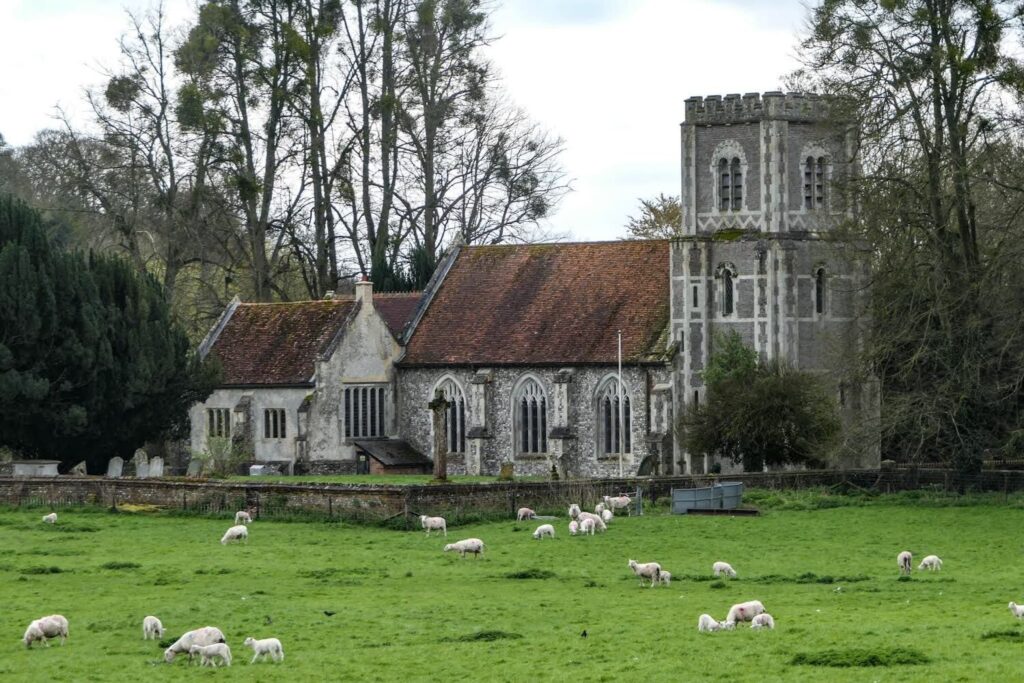
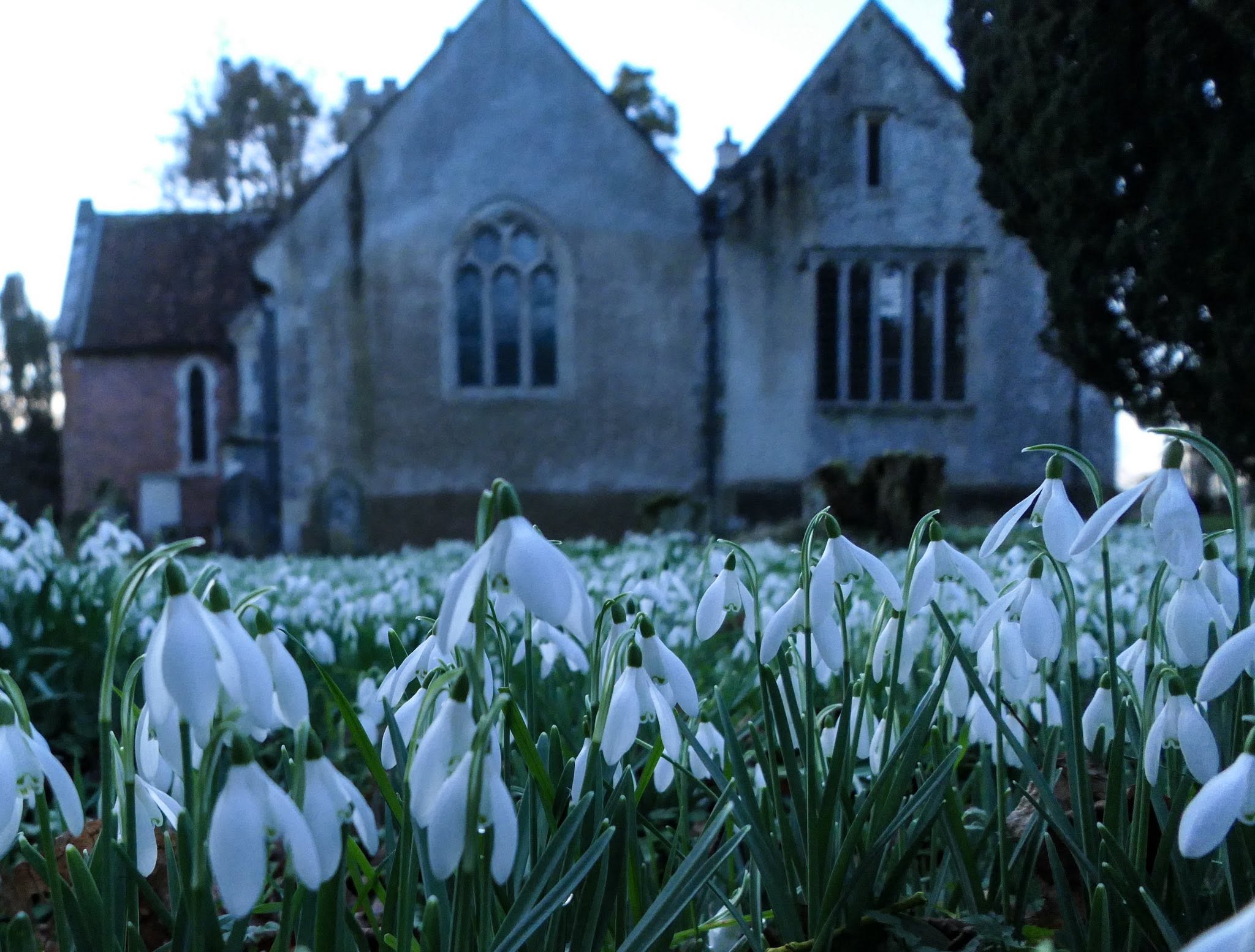
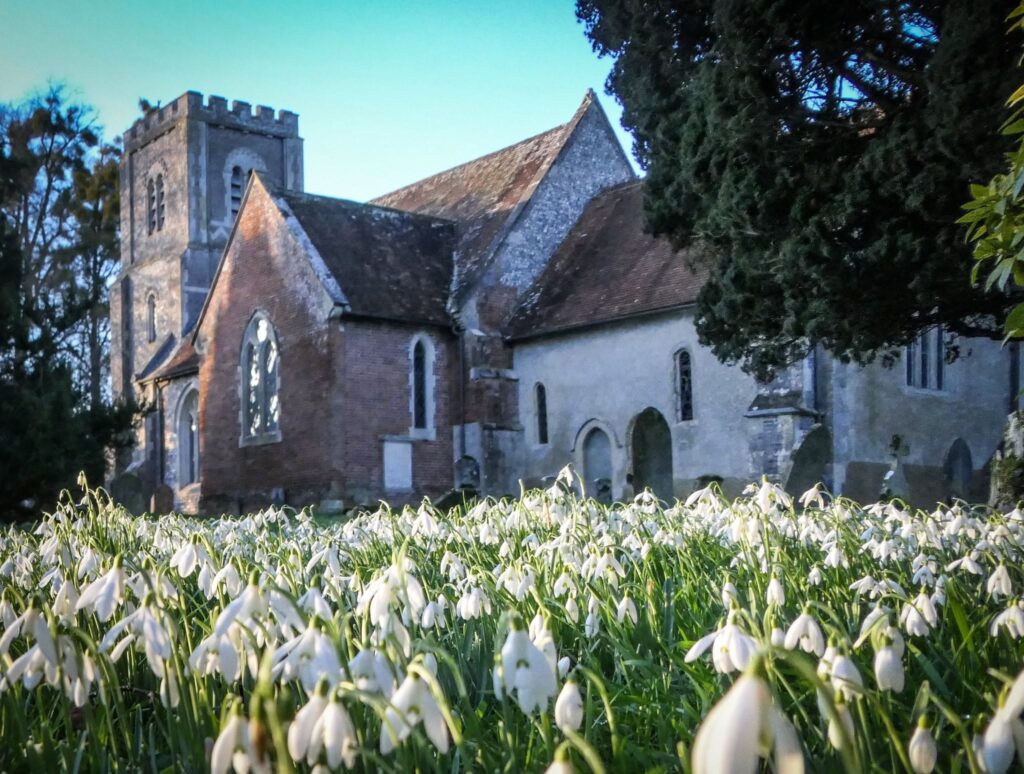
St. Andrew’s is the Church of England Parish Church of Hurstbourne Priors and is in the Diocese of Winchester.
Church of England Parish Church of Hurstbourne Priors
St Andrew’s is the parish church of Hurstbourne Priors and an important part of our community.
It has been a place of worship for over 1,200 years and is steeped in history – it is probably the oldest church in the Diocese of Winchester.
In 820 England did not exist as a unified country, but rather as several independent Anglo-Saxon kingdoms like Mercia and Wessex. King Egbert of Wessex (the Great Grandfather of Alfred the Great) was the dominant ruler. The Viking Age and raids were just beginning and were setting the stage for future invasions and resistance.
England by then was predominantly Christian, having undergone conversion from the earlier Anglo-Saxon and Roman pagan beliefs. In the same year 820, the charter of Denewulf (Saxon Bishop of Winchester) refers to the church’s consecration and our church today is believed to stand on the remains of what was the original Saxon building.
The earliest part of the present church dates from the 12th century a time of transition after the Norman conquest, marked by a booming economy driven by wool and trade, population growth, and the expansion of towns. It saw the beginnings of a money based economy, putting pressure on the old feudal system, and a cultural shift with English replacing Norman French as the main language. The influence of the monarchy increased, and monasteries and churches grew reflecting the strong influence of religion.
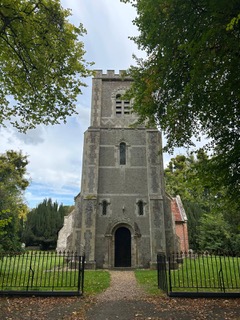
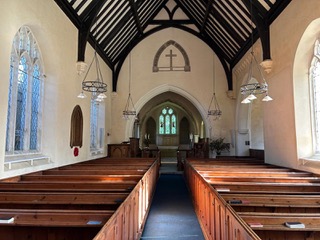
In the 18th century during the reigns and transition from the Royal House of Stuart to Hanover a south transept was built for the use of the Portsmouth family (the Portsmouth Aisle). The nave was rebuilt and the old wooden balcony replaced by a tower in 1870. The chancel was also heavily restored but you can still see some of its medieval details, including the sedilia (recessed seats in the wall beside the altar), the chancel arch and the outline of the blocked priest’s door in the south wall.
The Bell Tower originally contained six bells which, from their dates, were installed in different periods. The treble is dated 1667 but is believed to be a recast of an even earlier treble bell. The bells were restored and rehung with the addition of two new bells in 1999 in time for the millennium.
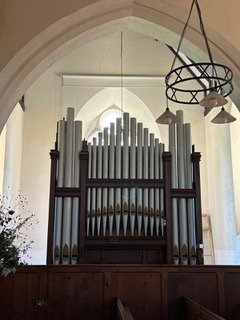
The Organ was designed by Sir Hubert Parry, the famous composer, and was played by him at the opening ceremony in 1906. His son-in-law, Harry Plunket Greene (author of the book on angling “Where the Bright Waters Meet”) sang as a member of the choir on that occasion.
On the south side of the church there is a Yew which is judged to be between 700 and 800 years old and to the east there is a Horse Chestnut which is at least 200 years old and formerly believed to be the second largest in England. Sadly as a result of storm damage this is no longer the case, but it is still a magnificent tree.
A group of volunteers ensure that the church is open daily from 10am to 4pm from the end of March to the end of October. During winter months the church is usually open during the day on Sundays. Details of services at St Andrew’s Church are listed in the Hill and Valley and all are warmly welcome. If you would like to join the mailing list to receive information about services and other church events, please contact Ann Orr (annjorr@btinternet.co.uk)